

Introduction
Most visitors experience Kolkata during the day, when the streets are buzzing with yellow taxis, trams, busy markets, and the constant rhythm of city life. That’s the Kolkata you’ll see in most guidebooks. But if you ask me, you’re only seeing half the city.
To truly understand Kolkata, you need to wake up early. The first few hours after sunrise reveal a completely different side of the city.
The roads are quieter, the air is cooler, and life unfolds at a slower pace. You’ll see people enjoying their morning walks, sipping tea from tiny roadside stalls, buying fresh flowers for temples, crossing the Hooghly River on ferries, and gathering in parks for yoga, laughter clubs, or an early game of cricket and football.
It’s a side of Kolkata that many tourists never get to experience, but one that locals cherish every single day.
It’s a side of Kolkata that many international travellers never get to see, simply because they’re still asleep. But if you’re willing to wake up a little earlier, you’ll discover a calmer, more authentic version of the city one that locals experience every single day.
About Your Guide

Hi, I’m Paulami Kundu, born and raised in Kolkata. I’m an actor working across theatre and films, a model, and a storyteller guide who loves introducing people to my city. One of my favourite things about this job is meeting people from different parts of the world and learning about their cultures. I’m also passionate about travelling myself, and if there’s an adventure sport involved, you can count me in!
I know waking up early while travelling isn’t always easy. You might be jet-lagged after a long flight, or perhaps your comfortable hotel bed is convincing you that another hour of sleep is a much better idea. Trust me, I’ve travelled enough to know that feeling. But if you can set your alarm just once and step outside before the city fully wakes up, I promise you’ll be rewarded. Early mornings reveal a side of Kolkata that many visitors never get to experience. You’ll see the city at its most peaceful, watch everyday life unfold naturally, and enjoy moments that can’t be recreated later in the day.
In this guide, I’ll share the morning experiences I genuinely recommend to my own friends when they visit Kolkata. Some are famous, others are wonderfully ordinary, but together they offer one of the most authentic ways to experience the city.
Start Your Day at Victoria Memorial & The Maidan
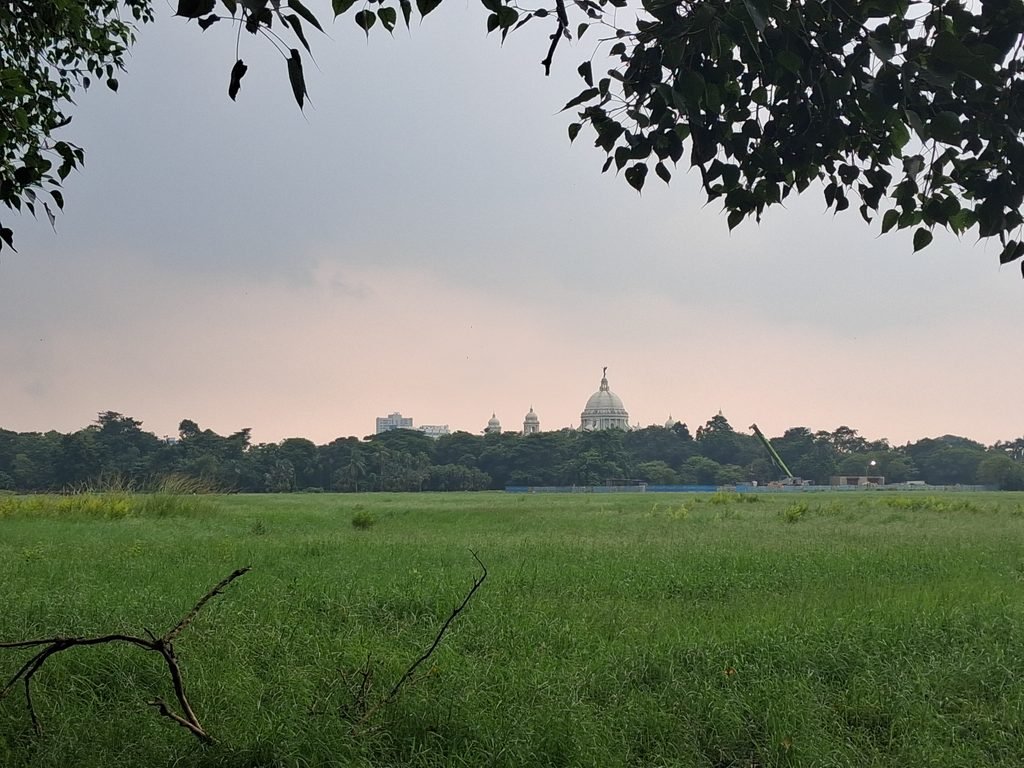
If you’re wondering where to begin your morning in Kolkata, I’d send you here without a second thought. Victoria Memorial and the Maidan sit side by side, yet they tell two very different stories about the city. One speaks of Kolkata’s colonial past, while the other reminds you that this is still a living, breathing city where everyday life unfolds from the very first light of day.
About Victoria Memorial
The magnificent Victoria Memorial was built between 1906 and 1921 in memory of Queen Victoria after her death. Constructed entirely from white Makrana marble, the same marble used for the Taj Mahal, it was originally intended as a symbol of the British Empire in India. More than a century later, however, it has become something much bigger than that.
Today, it’s simply one of Kolkata’s most beloved landmarks. In the early morning, before the tourist buses arrive, the atmosphere around Victoria Memorial feels completely different. The marble glows softly in the golden morning light, birds circle above the gardens, and locals quietly walk along the pathways, enjoying one of the calmest moments the city has to offer.
About Maidan
Just across the road lies the Maidan, often called the “lungs of Kolkata.” This enormous green expanse was created during the British era by clearing the land around Fort William, partly for military reasons and partly to give the fort an unobstructed view of its surroundings. Today, that military ground has transformed into Kolkata’s largest public open space and one of the city’s favourite gathering places.
Come here in the morning, and you’ll find the Maidan full of life. People jog beneath centuries-old trees, friends play football and cricket on countless makeshift pitches, horse riders trot across the open fields, yoga groups stretch in the fresh air, and tea vendors serve steaming cups of chai to regulars who have followed the same morning routine for years.
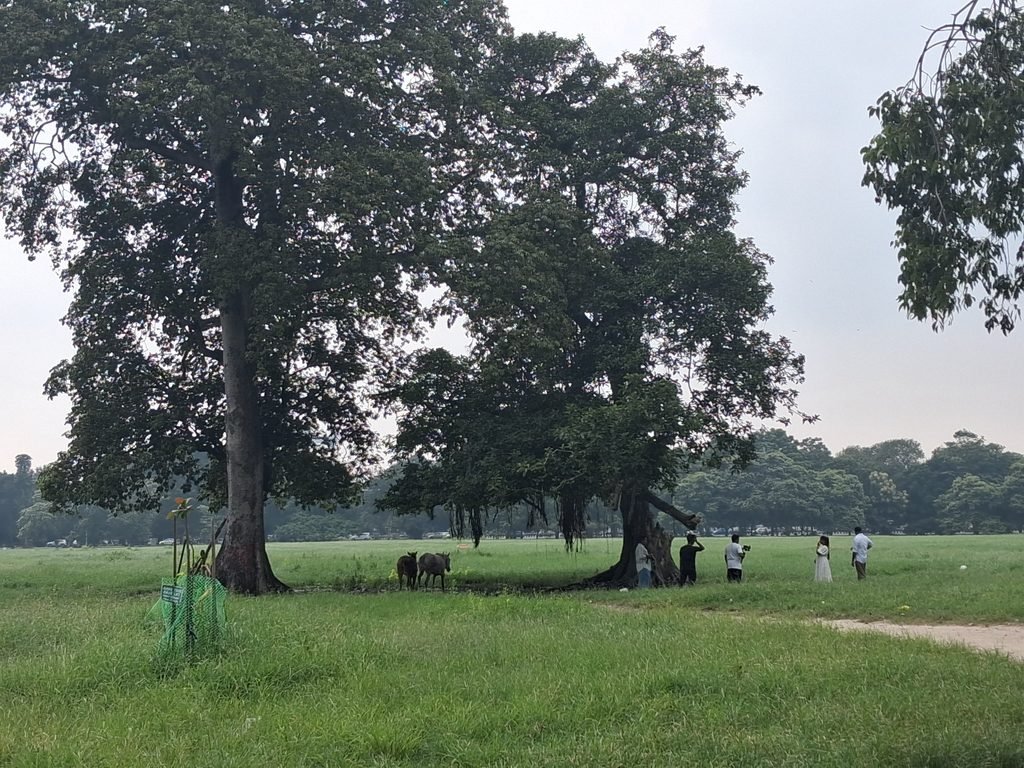
One thing I particularly love about standing in the Maidan is looking towards the city’s skyline. On one side, you’ll see colonial-era landmarks like Victoria Memorial and Turn slightly, and rising above them is The 42, one of India’s tallest residential skyscrapers.
Few places in Kolkata capture the city’s journey through time quite like this. Within a single glance, you’ll see over a century of history standing alongside modern Kolkata, reminding you that this city has never stopped evolving.
Things to know:
- Best Time to Visit: 6:00 am – 8:00 am
- Time Required: 1–2 hours
- Nearest Metro Station: Maidan (Blue Line) or Rabindra Sadan (Blue Line)
- Entry Fee: The Maidan is free. Victoria Memorial Gardens require an entry ticket 20 Rs for Indian and Foreigners, while the museum has a separate ticket, it’s open by 9:00 A.M. For Indians it’s 50, SAARC Countries 100, and Foreigners 500.
- Local Tip: If you’re planning to visit the Victoria Memorial museum, enjoy your morning walk first and return after it opens. The peaceful gardens and the maidan make a perfect combination for the start of your day.
Visit the Mullick Ghat Flower Market
If you’ve never visited a flower market before sunrise, prepare yourself for a sensory overload. Hidden beneath the eastern end of the iconic Howrah Bridge, Mullick Ghat Flower Market is one of the oldest and largest flower markets in India. It has been serving Kolkata for well over a century, supplying flowers to temples, weddings, festivals, hotels, and homes across the city.
About Mullick Ghat Flower Market
Every single day, thousands of kilograms of fresh flowers arrive here from nearby villages before dawn, long before most of Kolkata has even woken up. By the time you arrive, the market is already in full swing.
Porters weave effortlessly through the narrow lanes carrying enormous sacks of marigolds on their heads, shopkeepers negotiate prices at remarkable speed, and photographers try to capture the organised chaos unfolding around them.
Everywhere you look, you’ll find vibrant orange, yellow or brown mixed marigolds, fragrant jasmine, deep red roses, lotus flowers, bright yellow sunflowers, and countless other blooms stacked into colourful mountains. It’s loud, busy, and wonderfully chaotic, but somehow everything works.
One thing I particularly enjoy is simply standing back for a few minutes and watching the market operate. At first, it might look like complete disorder, but the longer you watch, the more you’ll notice that everyone seems to know exactly where they’re going. It’s a beautiful reminder that Kolkata has its own rhythm, and once you slow down enough to observe it, everything starts making sense.
Another reason I recommend visiting early is the location itself. Just a short walk away is the Hooghly River, with the magnificent Howrah Bridge towering overhead. As the morning light grows stronger, you’ll see ferries crossing the river, flower sellers finishing their business, and commuters beginning another day. Together, they create one of the most authentic morning scenes you’ll find anywhere in Kolkata.
Things to Know:
- Best Time to Visit: 5:30 am – 7:30 am
- Time Required: 30–60 minutes
- Nearest Metro Station: Howrah Metro Station (Green line)
- Entry Fee: Free
- Photography: Allowed (always ask permission before taking close-up portraits of vendors)
- Local Tip: Wear comfortable shoes, as the market floor can be wet and slippery from freshly cut flowers, melting ice and mud.
See Howrah Bridge Before the City Gets Busy
If you’ve seen photos of Kolkata before planning your trip, there’s a good chance you’ve already seen Howrah Bridge. It’s one of the city’s most recognisable landmarks and has connected Kolkata with Howrah since 1943.
More than just a tourist attraction, it’s part of everyday life here. Every single day, thousands of people cross it on their way to work, school, or home. That’s exactly why I think the morning is the best time to see it. Later in the day, the bridge is packed with traffic and people. It’s still impressive, but it can feel a little overwhelming.
In the early morning, though, everything is just a little calmer. The city is slowly waking up, ferries begin crossing the Hooghly River, tea stalls start serving their first customers, and the roads gradually become busier with every passing minute. You almost get to watch Kolkata switch itself on.
If you’re standing by the river, don’t just admire the bridge from below. Take one of the stairways up and walk across it for a few minutes. Standing on the bridge is a completely different experience from simply looking at it. As buses, trucks, cars, and thousands of people pass by, you’ll actually feel the bridge gently vibrate beneath your feet. Don’t worry, it’s perfectly normal. The bridge carries an enormous amount of traffic every day, and feeling those subtle vibrations is all part of the experience.
It’s one of those little moments that makes you realise this isn’t just a monument, it’s a living, working part of Kolkata that has kept the city moving for generations.
Things to know:
- Best Time to Visit: 6:00 am – 8:00 am
- Time Required: 20–45 minutes
- Nearest Metro Station: Howrah Metro Station (Green Line)
- Entry Fee: Free
- Optional Experience: Take a public ferry across the Hooghly River for panoramic views of the bridge.
- Local Tip: If you’ve already visited the Mullick Ghat Flower Market, walk towards the river afterwards. The combination of the flower market, the Hooghly River, and Howrah Bridge makes for one of the most memorable mornings in Kolkata.
Looking for a Quieter Morning? Head to Rabindra Sarobar
Now, maybe waking up at 5:30 in the morning to visit a flower market doesn’t sound like your idea of a holiday and that’s completely fine. If you’d rather swap the crowds for a peaceful walk by a lake, let me introduce you to one of my favourite places in Kolkata.
About Rabindra Sarobar
Rabindra Sarobar is in South Kolkata, so it’s not somewhere I’d combine with the Victoria Memorial or Howrah Bridge. But if you’re staying nearby, or simply want a slower start to your day, I think you’ll really enjoy it.
Built around a large lake and surrounded by hundreds of trees, Rabindra Sarobar feels like a completely different city. In fact, if someone dropped you here without telling you where you were, you’d probably never guess you were in one of India’s busiest metropolitan cities.
Come here in the morning, and you’ll see Kolkata at its most relaxed. Some people are jogging, some are walking with friends, yoga groups quietly stretch beneath the trees, and plenty of others simply find a bench, sip their morning tea, and enjoy the fresh air before work. Nobody seems to be in a hurry, and I think that’s exactly what makes this place so special.
One thing I always enjoy here is watching the birdwatchers. You’ll often see them carrying cameras with enormous lenses or binoculars, patiently waiting for the perfect shot. During winter, migratory birds also arrive at the lake, making it an even more rewarding place if you enjoy nature or photography.
If your trip to Kolkata is packed with sightseeing, Rabindra Sarobar is a lovely reminder that you don’t always have to be doing something. Sometimes, one of the nicest ways to experience a city is simply to slow down and watch local life unfold around you.
Things To Know:
- Best Time to Visit: 6:00 am – 8:30 am
- Time Required: 45–90 minutes
- Nearest Metro Station: Rabindra Sarobar (Blue Line)
- Entry Fee: Free
- Best For: Morning walks, birdwatching, photography, and a peaceful escape from the city’s hustle.
Experience Kolkata’s Morning at Koley Market
If you’ve already visited the flower market and you’re curious about what a typical morning in Kolkata looks like, let me suggest something a little different. Near Sealdah Railway Station is Koley Market, one of the city’s largest wholesale fruit and vegetable markets.
About Koley Market
Unlike the colourful flower market, this is where Kolkata’s daily food supply begins its journey. Long before most of us wake up, trucks loaded with vegetables, fruits, and sacks of produce arrive from different parts of West Bengal and neighbouring states. By sunrise, the market is already buzzing.
This isn’t really a tourist attraction, and that’s exactly why I like recommending it.You’ll see shopkeepers bargaining, workers unloading trucks, porters impossible looking loads on their heads, and buyers selecting vegetables that will later end up in restaurants, neighbourhood markets, and homes all across Kolkata. It’s noisy, messy, and incredibly fascinating to watch.
One thing I’d say is don’t come here expecting a picture-perfect market. It’s probably not the cleanest place you’ll visit in Kolkata, and it definitely won’t appear on most travel itineraries Koley Market is a working wholesale market, and it feels exactly like one.
The roads can be muddy, people are busy doing their jobs, and you’ll probably be the only tourist around. But if you enjoy seeing how a city actually functions behind the scenes, I think you’ll find it surprisingly rewarding.
Things to Know:
- Best Time to Visit: 5:30 am – 7:30 am
- Time Required: 30–45 minutes
- Nearest Metro Station: Sealdah Metro Station (Green Line)
- Approximate Cost: Free
- Best For: Experiencing local life, street photography, and seeing Kolkata’s wholesale trade in action.
- Local Tip: This is a busy working wholesale market, not a tourist attraction. Wear comfortable shoes, be mindful of handcarts and porters carrying heavy loads, and avoid getting in the way of people working. If you’d like to photograph someone up close, it’s always polite to ask for permission first.
Finish Your Morning with a Traditional Bengali Breakfast
After all that walking, you’ve earned a proper breakfast. And no, I don’t mean grabbing a sandwich or a croissant on the way back to your hotel. If you’ve made it this far through the morning, I think you should end it the way many Kolkatans do, with a plate of hot Kochuri and Aloo Tarkari.
About The Food
If you’ve never had Kochuri before, think of it as a deep-fried flatbread, but with a surprise inside. It’s usually stuffed with a mixture of ground lentils and aromatic spices like fennel seeds, cumin, and a touch of asafoetida (hing), which gives it a wonderfully distinctive flavour.
It’s served with Aloo Tarkari, a light potato curry that’s gently spiced with ginger, cumin, turmeric, and sometimes a hint of whole garam masala. The curry isn’t particularly hot, but it’s incredibly comforting, especially on a cool morning.
One thing I absolutely love is watching the Kochuris being made. The dough is rolled out, slipped into a giant wok of hot oil, and within seconds it puffs up into a beautiful golden balloon. It arrives at your table so hot that you’ll probably have to wait a minute before taking your first bite. Trust me it’s worth the wait. And if you have a sweet tooth, don’t stop there.
Order a couple of fresh Jalebis as well. They’re crispy, syrupy, and somehow the perfect ending after a savoury breakfast. It might sound like an unusual combination if you’re visiting from abroad, but here in Kolkata, nobody thinks twice about finishing breakfast with something sweet.
Perhaps my favourite part, though, isn’t the food itself it’s the atmosphere. Breakfast shops in Kolkata are wonderfully unpretentious. You’ll find office workers reading the morning newspaper, students grabbing a quick bite before class, families sharing plates, and old friends catching up over endless cups of tea. It feels less like a restaurant and more like a small part of the city’s everyday routine.
If you ask me, that’s exactly how you should end your morning in Kolkata.
- Best Time to Visit: 7:00 am – 9:30 am
- Time Required: 30–45 minutes
- Approximate Cost: ₹80–200 per person
- Vegetarian Friendly: Yes
Where to Eat:
- Maharaja (College Street) – One of the city’s best-known places for Kochuri and Aloo Tarkari.
- Putiram (College Street) – A favourite among students and locals for traditional Bengali breakfast and sweets.
- Sree Hari Mistanna Bhandar (Hatibagan) – Famous for freshly made Kochuri, Singara, and Bengali sweets.
- Kalika Mukhorochok (Bhowanipore) – Popular for its hot Kochuri served fresh from the wok.
- Sharma Tea House (Bhowanipore)- ideal if you want to pair your breakfast with a classic cup of Kolkata chai & jelabi.
- Good to Know: Most traditional breakfast shops are busiest between 8:00 and 9:00 am, and many stop serving breakfast by late morning. The earlier you arrive, the hotter and fresher everything will be.
Final Thoughts
Most people think of Kolkata as a city of grand colonial buildings, bustling markets, and endless traffic. And yes, it is all of those things. But if you ask me, the city’s real personality comes out in the early morning. It’s in the sound of a tea seller pouring the first cup of chai, the laughter of strangers walking together around Rabindra Sarobar, the organised chaos of the flower market, the first commuters crossing Howrah Bridge, and the irresistible smell of freshly fried Kochuris that somehow convinces you to have “just one more.”
You don’t have to do everything in this guide alone. Why not let us show you?
Step into our signature morning experience, Kolkata Morning Tour: Chasing The Sun, a story-driven journey designed to show you exactly how Kolkata wakes up.
I hope this guide helps you experience a side of Kolkata that many visitors miss. And who knows? By the end of the morning, you may find yourself doing exactly what the locals do, lingering over one last cup of tea before wondering where the rest of the day will take you.
Have a wonderful time in Kolkata, and I hope the city makes you feel as welcome as it has always made me feel at home.