

Mumbai is a city built on movement. Its legendary local trains alone carry more than 7 million passengers every single day, making it one of the busiest rail networks on earth.
For international tourists, stepping into this system can feel completely intimidating at first glance. However, once you learn the basic rules, Mumbai public transportation is the fastest, cheapest, and most authentic way to explore the heart of the city without getting trapped in gridlock traffic.
🎬 A Quick Hello From Your Guides
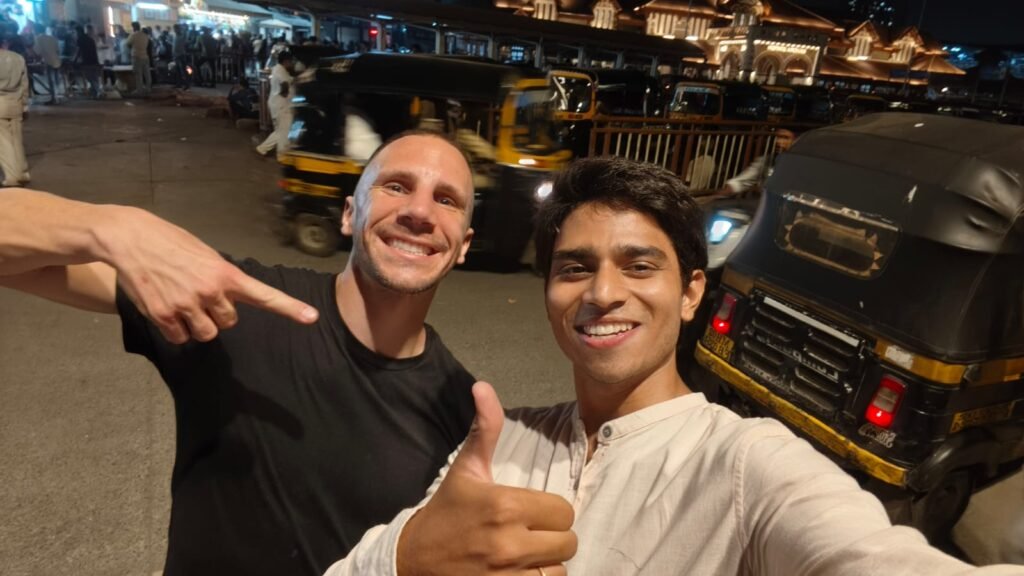
Hi, I am Yash, An Actor and Local Guide here in Mumbai.
I’m part of Get Local, where we do things a little differently. We are a small group of local theatre actors and storytellers who are deeply in love with Mumbai’s history.
Forget boring tours with clipboards or megaphones. We run Cinematic Tours, treating the streets like a live stage and using a story script instead of a dry list of sights. We also move around the city the exact same way locals do: mixing short walks with public transport.
Whether you’re figuring out the historic train lines or the new underground Metro, this guide will help you navigate Mumbai like a pro.
A. The Hub of Mumbai Suburban Railway: CST & Churchgate
Your orientation to the city begins at two iconic terminal stations located in South Mumbai. They sit just 10 minutes apart from each other and act as the primary anchors for almost every major sightseeing route:
Chhatrapati Shivaji Maharaj Terminus (CSMT / CST)
The magnificent UNESCO World Heritage building that serves as the starting point for both the Central Line and the Harbour Line.
Churchgate Station
The clean, bustling terminal that serves as the starting point for the Western Line.
How to Read the Platform Signboards
No matter where you are traveling from in the city, there will always be a train heading back down toward these two hubs. Look at the overhead digital destination boards on the platforms:
- “C” indicates the train is heading to Churchgate.
- “ST” indicates the train is heading to CST.
B. Mastering the Mumbai Local Train Lines
Think of Mumbai’s rail network like a massive tree branching northwards out of South Mumbai. The lines are split into three distinct routes:
The Western Line
Best For: This is the most critical route for travelers. It seamlessly links major cultural and trendy neighborhoods like Bandra, Juhu, and Goregaon.
The Central Line
Best For: Taking you directly through the busy local hubs of Dadar and historic neighborhoods like Byculla.
The Harbour Line
Best For: Accessing offbeat heritage pockets and dock areas like Mazgaon.
⚠️ Essential Visitor Tip: Fast vs. Slow Trains
Always stick to Slow Trains. Slow trains stop at every single station on the map, meaning you can easily track your stops without stress. Fast trains skip minor stations and are packed with daily commuters sprinting to major corporate hubs—they are incredibly hectic and easy to get lost on if you are new to the city.
C. Navigating the Mumbai Metro Network
If you want to avoid the crowds of the old rail system, Mumbai’s rapidly expanding, fully air-conditioned Metro system is a lifesaver.
Line 1 (Blue Line):
Perfect for cutting horizontally across the city from Andheri to Ghatkopar to beat the bumper-to-bumper road traffic.
Line 3 (Aqua Line):
Mumbai’s underground route. It directly connects South Mumbai (Cuffe Parade) up through the business centers and right into both terminals of the Mumbai International Airport.
D. Essentials Apps to Download:
Before you step out of your hotel room, download the:
M-Indicator app
Available for download on Apple and Android. It is the ultimate real-time resource used by locals for exact train timings, live platform updates, and route connections.
Mumbai Metro
For the subway routes, keep a digital copy of the official Google Metro Map handy. You can use the official Mumbai One App for booking tickets- Android and Apple.
E. Navigating Mumbai Cabs, Auto-Rickshaws, & Buses
When you aren’t riding the rails, you will need to utilize the city’s iconic roads. Here is exactly how to handle them without getting overcharged:
🛺 Auto-Rickshaws (The “Autos”)
- The Golden Rule: Always ensure the driver turns on the electronic meter, or simply book your ride via apps like Uber or Rapido for guaranteed fair pricing.
- Understanding the Meter Fare: If you go by the meter, the base fare starts at Rs. 26 during daytime and goes up to a Rs. 29 night base fare. This base fare covers the first 1.2 km of your ride. On average, you will pay a running rate of Rs. 21.6 per km during the day and Rs. 24.2 per km at night. Keep in mind that a variable waiting charge will also apply if you get stuck in heavy traffic or ask the driver to stop somewhere.
- Crucial Traffic Law: Auto-rickshaws are legally banned from entering South Mumbai (the old town area). They only operate in the suburban neighborhoods like Bandra, Juhu, Borivali, and Goregaon.
🚖 Local Taxis (The Iconic Kaali-Peeli)
- Understanding the Taxi Fare: If you are traveling in South Mumbai where autos aren’t allowed, you will rely on the classic black-and-yellow cabs. If riding by the meter, the daytime base fare is Rs. 31, while the night base fare jumps to Rs. 39. On average, expect a running cost of Rs. 26 per km during the day and Rs. 32.5 per km at night. Like autos, standard waiting charges apply if you are sitting in gridlock traffic.
- The Tourist Warning: Nowadays, traditional Kaali-Peeli taxis are becoming less frequent on the streets. Because of this, drivers will occasionally try to avoid using the meter and overcharge international tourists. It is highly recommended to take local street cabs only when auto-rickshaws are completely unavailable, or simply bypass the hassle entirely by booking a cab through ridesharing apps like Uber, Ola, or Rapido.
- Money-Saving Hack: Outside major train and metro stations, look for Share Cabs. These run on fixed routes to popular tourist spots and business centers, charging you a very cheap rate per individual seat.
🚌 Double-Decker & Local Buses
- The Vibe: Buses are an amazing, cheap, and fully air-conditioned way to travel through South Mumbai.
- The Foreigner Trap: While the bus grid is excellent, it can be incredibly confusing for international travelers because the digital route signboards are written in Marathi.
- The Ultimate Fix: The absolute best way to use the bus network is to download the Chalo App (available on Android and iOS). It tracks live bus locations, maps routes in English, and lets you buy digital tickets right on your phone.
Top 2 Scenic Routes for Visitors:
- Gateway of India ➔ CST Station: Buses line up directly opposite the iconic Gateway entrance.
- Churchgate Station ➔ Gateway of India: Frequent, easy-to-catch buses depart from right outside the station gates.
🎭 Experience the Real Mumbai at Sunset
If you want to taste different flavours, discover different sides of Mumbai, and experience the city through its local trains, buses and iconic black-and-yellow taxis, then we have the best experience for you!
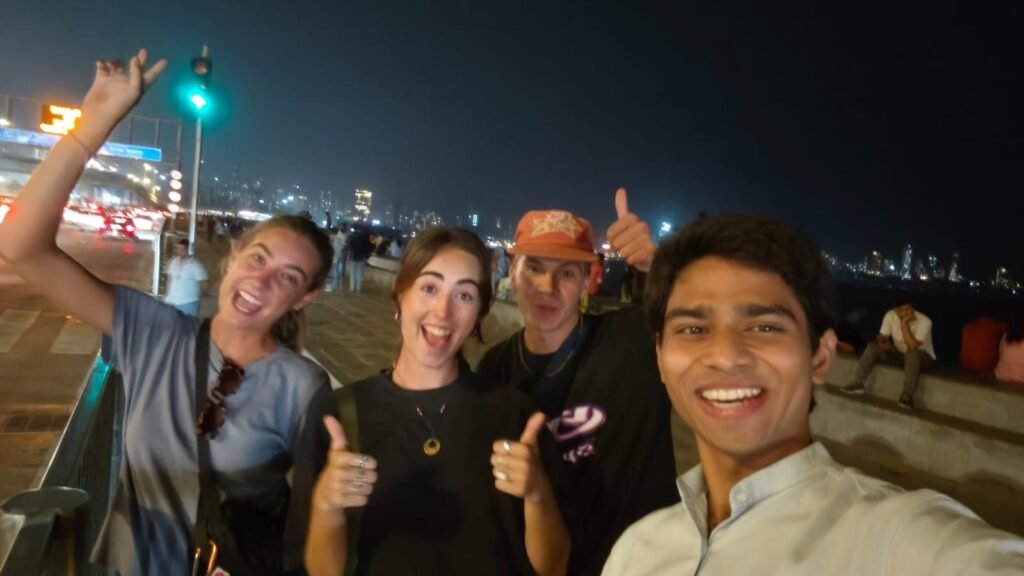
Check out our Street Food and Night tour titled, “Lights, Flavour, Action!”
Here is what the tour looks like:
- The Lights: We explore South Mumbai just as the sun goes down and the gorgeous old colonial buildings and seaside promenades light up under the neon night sky.
- The Flavour: This is a massive feast. We take you straight to the best hidden stalls to eat 8 legendary street food. You will try the spicy, buttery goodness of fresh Pav Bhaji and the classic crunch of Vada Pav right outside the buzzing stations.
- The Action: You get to experience the wild rush hour energy completely stress-free, because a professional actor who knows the transit system inside-out is leading you safely through the crowds.
If you want to skip the lonely tour buses and actually feel the pulse of the city, come hang out with us.
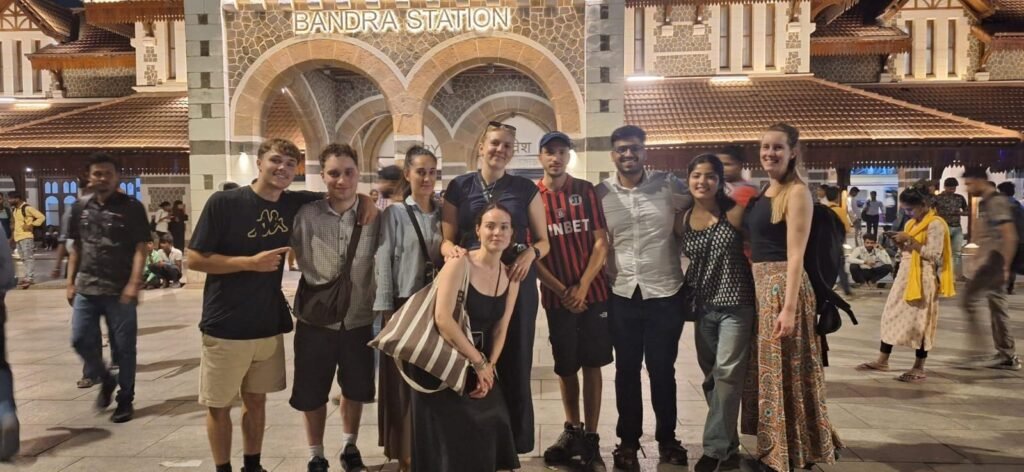
And the best part? You don’t just travel around Mumbai—you travel the way Mumbaikars do, using different modes of local transport along the way.