

Introduction
Kolkata isn’t the kind of city you can tick off a checklist. Can you experience Kolkata in just one day? Honestly, no. As a result, even people who’ve lived here their entire lives are still discovering new corners of the city.
However, can you experience the essence of Kolkata in one day? Absolutely.
If your time is limited, don’t worry. With this comprehensive Kolkata Guide, you can witness the city’s rich history, vibrant culture, beautiful architecture, spiritual side, and, of course, some unforgettable food, all in a single day.
Furthermore, it is a city that reveals itself slowly. One moment you’re standing in front of a magnificent colonial monument, and ten minutes later you’re sipping chai from a tiny roadside stall that’s been serving locals for decades. Naturally, it’s chaotic yet charming, old yet constantly evolving, and somehow manages to make all those contradictions feel perfectly normal.
This isn’t a race to see every attraction. It’s about experiencing the places that make Kolkata feel like Kolkata. The sights that locals are proud of, the stories hidden behind old walls, the flavours you’ll remember long after you’ve gone home, and those little moments that often become the best memories of a trip.
Therefore, since you’ve only got one day in the City of Joy, let’s make every hour count.
About Your Kolkata Guide

Hi, I’m Paulami Kundu, born and raised in Kolkata. I’m an actor working across theatre and films, a model, and a storyteller guide who loves introducing people to my city.
One of my favourite things about this job is meeting people from different parts of the world and seeing Kolkata through their eyes. Every traveller notices something different. Some fall in love with the old buildings, some with the food, and some simply with the warmth of the people.
Specifically, when someone asks me, “If I only have one day in Kolkata, where should I go?”
And honestly, I love that question. Therefore, if I had just one day to show someone my city, I wouldn’t try to squeeze in every tourist attraction instead, I’d take them to the places that capture the soul of Kolkata. The places that tell the story of who we are, where we’ve come from, and why this city leaves such a lasting impression on the people who visit it.
Therefore, think of this blog as if we’ve just met, you’ve told me you’ve got one day to spare, and so naturally, I’m planning your perfect day in Kolkata. This is the route I’d recommend to a friend, and I hope by the end of it, you’ll understand why so many of us proudly call this city home.
9:30 AM – Victoria Memorial & St. Paul’s Cathedral
I guess by this time you’ve had your breakfast, it’s time to begin your day with two of Kolkata’s most iconic landmarks. The best part? They’re right next to each other, so you can comfortably explore both on foot without wasting time travelling.
Victoria Memorial
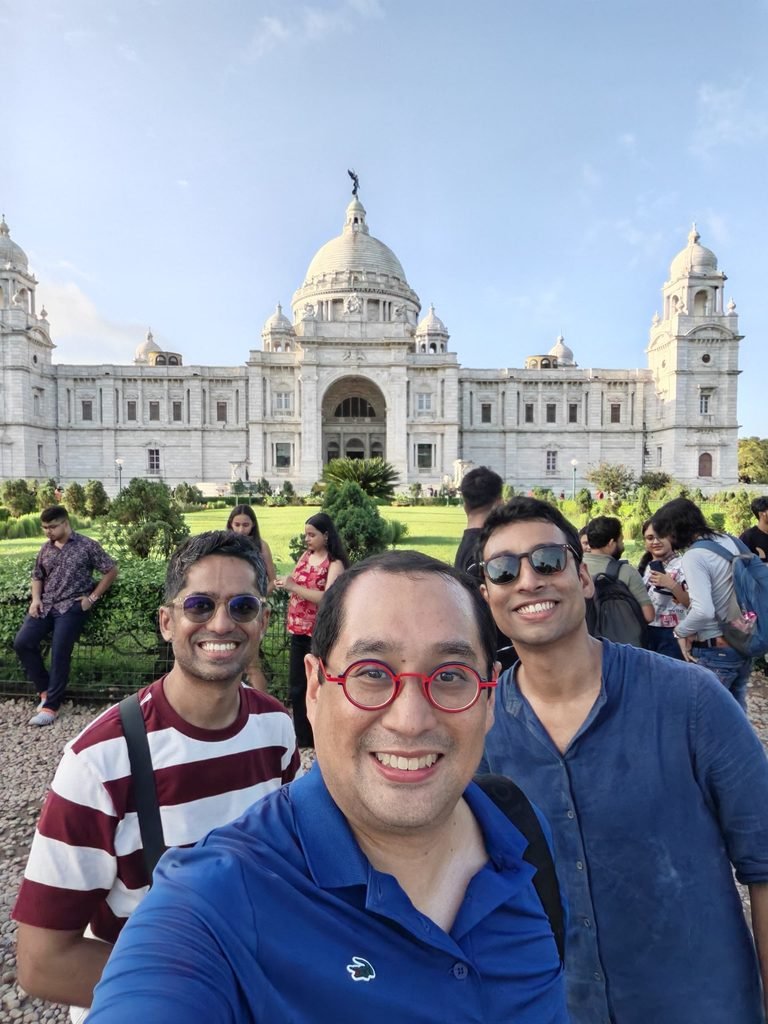
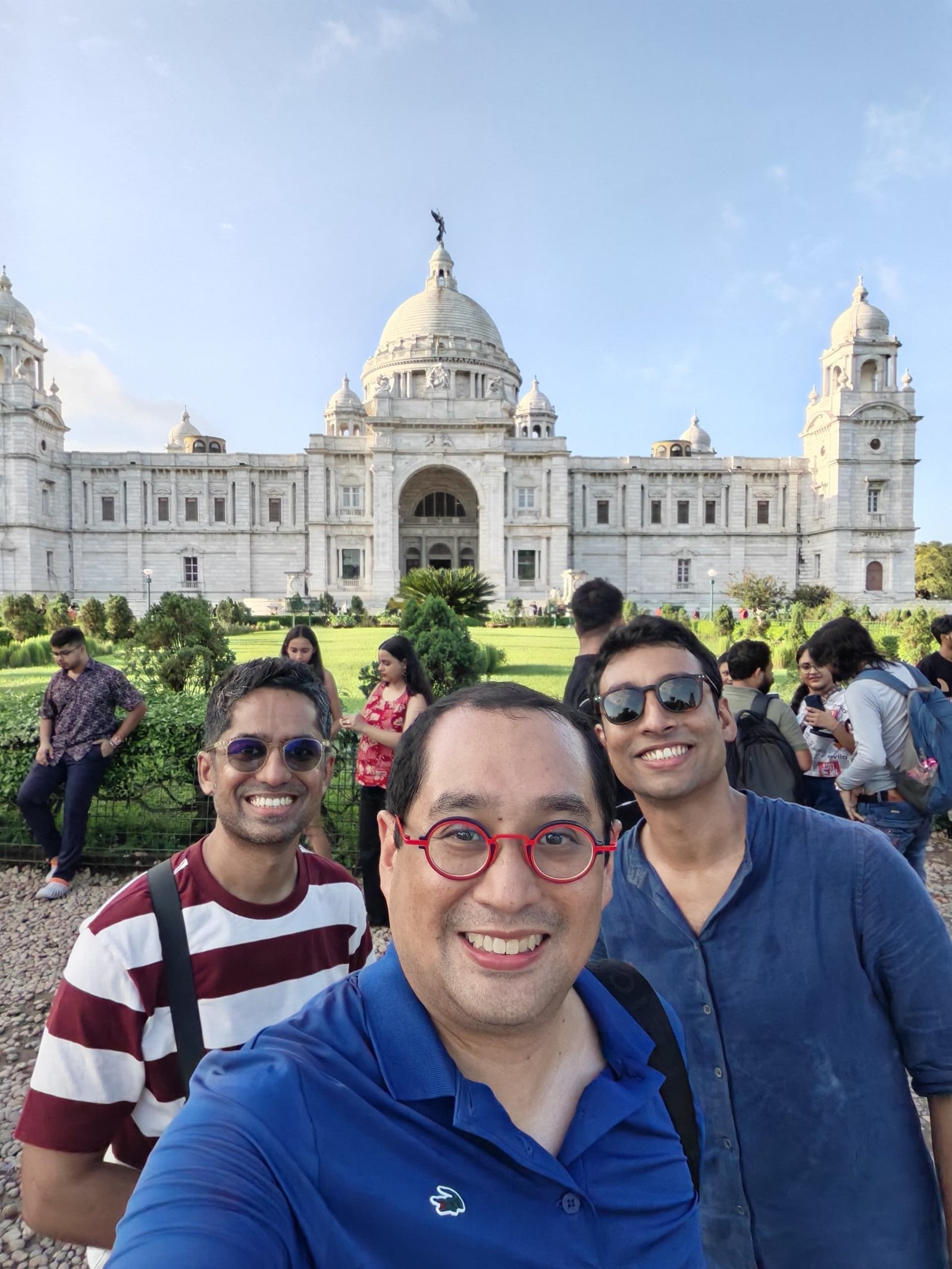
If there’s one building that has become the face of Kolkata, it’s the Victoria Memorial.
Built in memory of Queen Victoria after her death in 1901, this magnificent white marble monument is often compared to the Taj Mahal because of its striking appearance. While the Taj Mahal tells a story of love, the Victoria Memorial tells the story of the British Raj in India. Today, it houses a museum filled with paintings, sculptures, manuscripts, and artefacts that offer a fascinating glimpse into Kolkata’s colonial past.
Even if history isn’t your thing, it’s difficult not to be impressed. Surrounded by beautifully maintained gardens and with its grand dome rising above the Maidan, it’s one of those places where you’ll probably find yourself stopping every few minutes just to take another photo.
Give yourself around 60–90 minutes here. Walk through the galleries, take a stroll around the gardens, and don’t forget to look back at the building from different angles, it’s one of the most photogenic spots in the city.
Visitor Information
- Location: Maidan, Centra towards southl Kolkata
- Nearest Metro: Maidan Metro Station (Blue Line), around a 5-minute walk
- Recommended Visit Time: 9:30 AM onwards, before the crowds and afternoon heat set in
- Time Required: 60–90 minutes
- Photography- Allowed by phone.
- Museum Entry Fee:
- Indian Citizens – ₹50
- SAARC Nationals – ₹100
- Foreign Nationals – ₹500
St. Paul’s Cathedral
Just a five-minute walk from the Victoria Memorial stands another Kolkata landmark that couldn’t feel more different.
Completed in 1847, St. Paul’s Cathedral is the first Anglican cathedral built in Asia and remains one of the finest examples of Gothic Revival architecture in India. Step inside, and the city suddenly feels miles away. The high vaulted ceilings, colourful stained-glass windows, wooden pews, and peaceful atmosphere make it one of the quietest places you’ll visit all day.
Whether you’re religious or not, it’s worth spending a little time here. Sometimes the best part isn’t looking at the architecture, it’s simply sitting in silence for a few minutes before heading back into Kolkata’s wonderfully chaotic streets.
You’ll probably need 20 minutes to explore the cathedral.
Visitor Information
- Location: Cathedral Road, beside the Victoria Memorial
- Nearest Metro: Maidan Metro Station (Blue Line), around a 7-minute walk
- Recommended Visit Time: Immediately after Victoria Memorial
- Time Required: 20–30 minutes
- Entry Fee: ₹10 per person
- Photography- Allowed
11:15 AM – B.B.D. Bagh (Dalhousie Square): Your Kolkata Guide to the city’s Historic Heart
From Victoria Memorial, it’s time to head towards the historic heart of Kolkata using the Kolkata Guide itinerary.
You can either take the Blue Line from Maidan and interchange to the Green Line from the station Esplanade to reach B.B.D. Bagh Metro Station, or simply book an Uber. If you’re travelling light, here’s a local recommendation, Uber Moto (bike taxis). They’re safe, usually much quicker than cars in Kolkata’s traffic, and much easier on your wallet.
Once you arrive, you’ll find yourself surrounded by some of the city’s most magnificent colonial buildings. As you explore the colonial architecture using this Kolkata guide, take a moment to admire the details. This area, formerly known as Dalhousie Square, was once the administrative centre of British India, and walking around here almost feels like stepping onto the set of a period film.
General Post office (GPO)
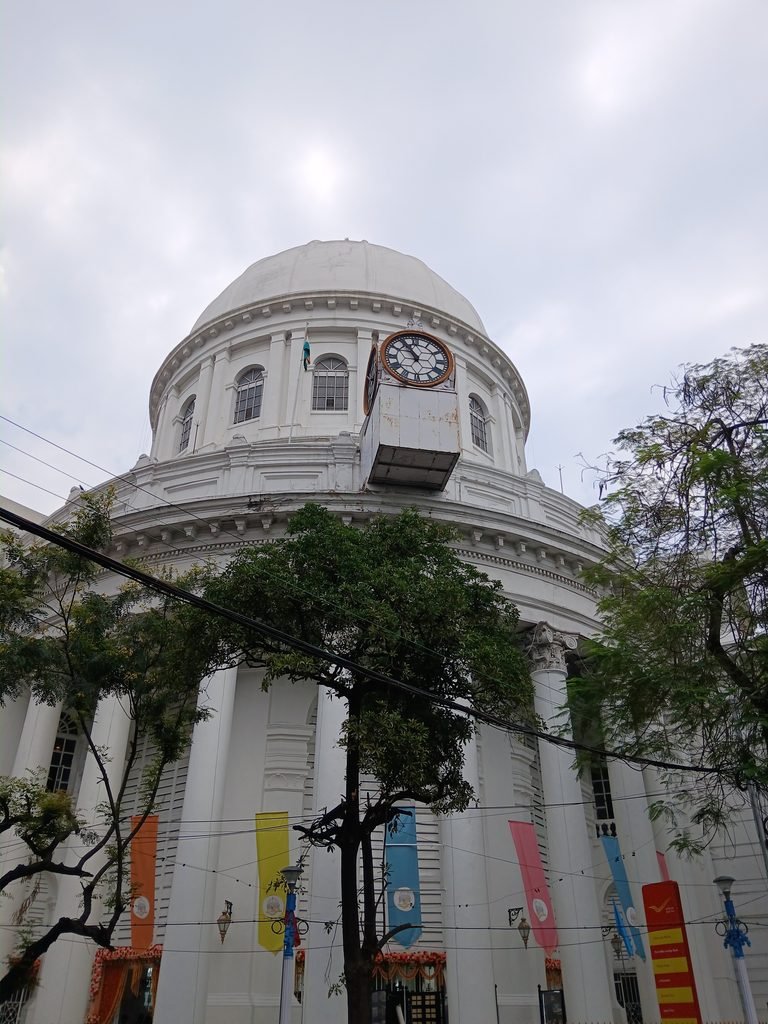
The first building you’ll notice is the magnificent General Post Office, or simply the GPO.
Completed in 1868, its massive white dome and grand Corinthian columns make it one of Kolkata’s most recognisable landmarks. It continues to function as the headquarters of the West Bengal Postal Circle, but beyond its postal services, the building stands on one of the most historically significant sites in the city, close to where the original Fort William once stood.
It’s one of those buildings that deserves a few quiet minutes. Stand back, admire the architecture, and imagine how many letters, stories, and pieces of history have passed through these doors over the last century and a half.
You can just go inside to see how things are working now a days. There is a small museum to explore also and if you want to buy nice stamps, or wants to send a postcard in your home country to someone, this is the perfect place.
Writers’ Building
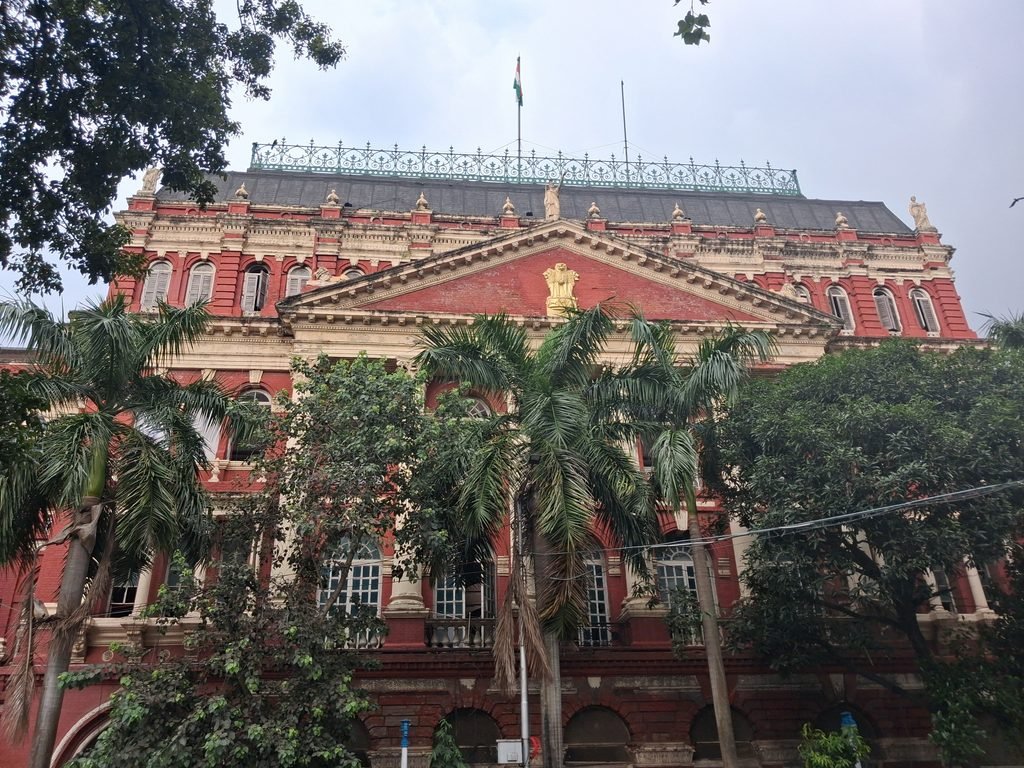
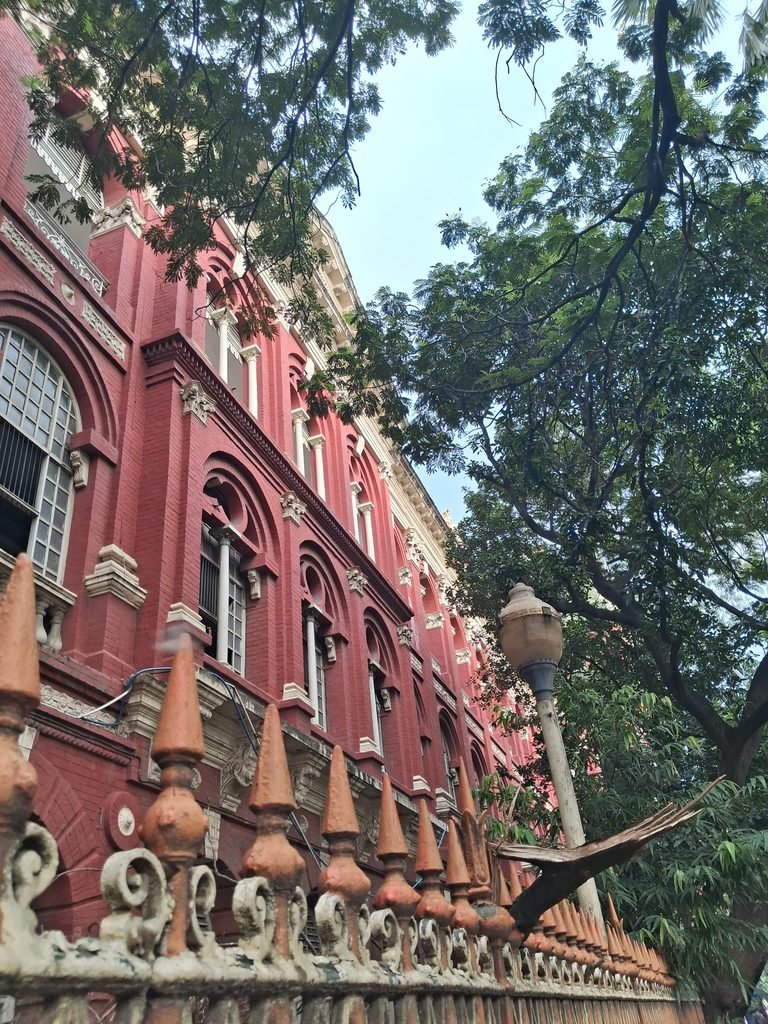
A short walk away stands the iconic Writers’ Building, easily recognised by its long red façade. Despite the name, it wasn’t built for authors. The “writers” were actually clerks of the British East India Company, and this was where they worked. Over the years, the building evolved into the administrative headquarters of the Government of West Bengal and became one of the most important government buildings in eastern India.
Although visitors can’t usually enter the building, its impressive architecture and historical significance make it well worth seeing from the outside.
Lal Dighi
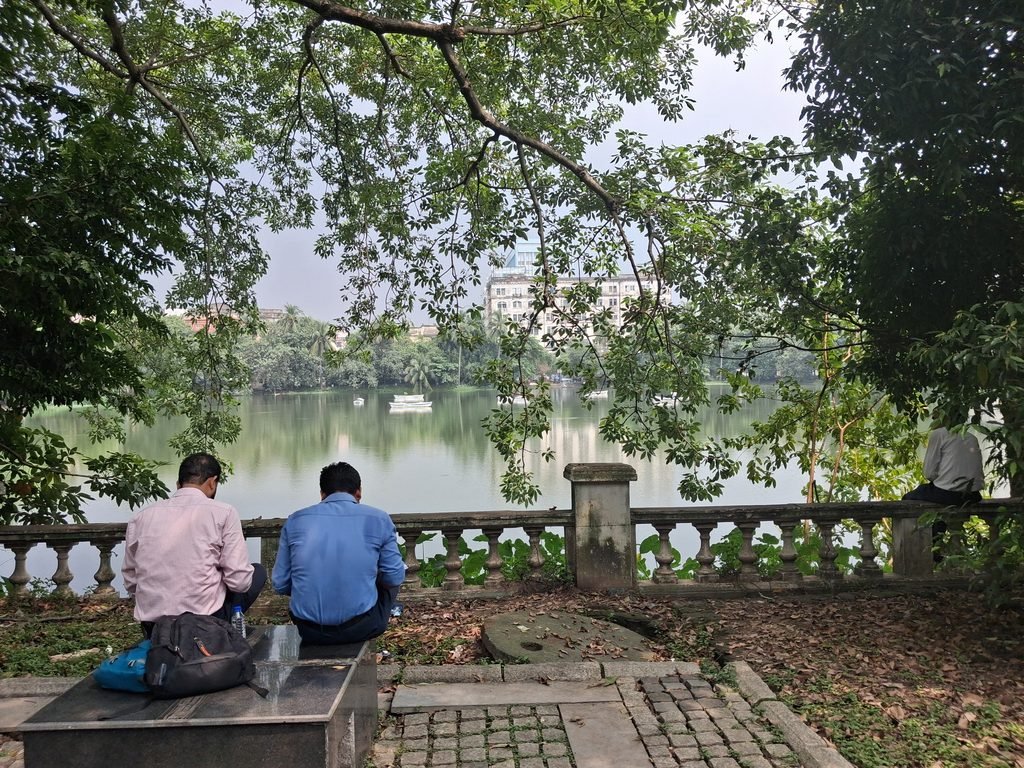
Directly opposite the Writers’ Building is Lal Dighi, a large historic water tank that has been at the centre of Kolkata since the city’s early days.
Surrounded by grand colonial buildings reflected in its waters, it’s a lovely place to pause for a few minutes before continuing your journey. The contrast between the calm lake and the bustling business district around it perfectly captures Kolkata, a city where history and everyday life exist side by side.
Visitor Information
- Location: B.B.D. Bagh (formerly Dalhousie Square), Central Kolkata
- Nearest Metro: B.B.D. Bagh Metro Station (Green Line)
- Recommended Visit Time: Around 11:15 AM
- Time Required: 45–60 minutes
- Entry Fee: Free
- Photography- Allowed
Getting To The Next Place – Ride a Kolkata Yellow Taxi
Before heading to your next stop of this Kolkata Guide, here’s something I’d highly recommend, not because it’s the fastest way to travel, but because it’s a Kolkata experience in itself.
As you walk out of B.B.D. Bagh, you’ll notice plenty of the city’s iconic yellow Ambassador taxis lined up near the GPO. These taxis have been a symbol of Kolkata for decades and are every bit as much a part of the city’s identity as trams and mishti. Hop into one and ask the driver to take you to Indian Coffee House, College Street.
Could you take an Uber instead? Of course. But where’s the fun in that?
Here’s a little local tip. Before you walk up to a taxi driver, quickly check the fare on the Uber app. That’ll give you a rough idea of what the journey should cost. Then quote a similar price to the driver. And don’t feel awkward about bargaining a little, it’s completely normal here. Most drivers expect it, and if you’re friendly about it, chances are you’ll both end up happy. I absolutely love these yellow taxis. In a world that’s slowly becoming shades of grey, black and white, these bright yellow Ambassadors add a splash of colour to the city’s streets.
The ride might be a little bumpy, the seats have definitely seen better days, and your driver may or may not become your unofficial tour guide, but that’s all part of the charm.
12:30 PM – Lunch at the Indian Coffee House: A Kolkata Guide Essential
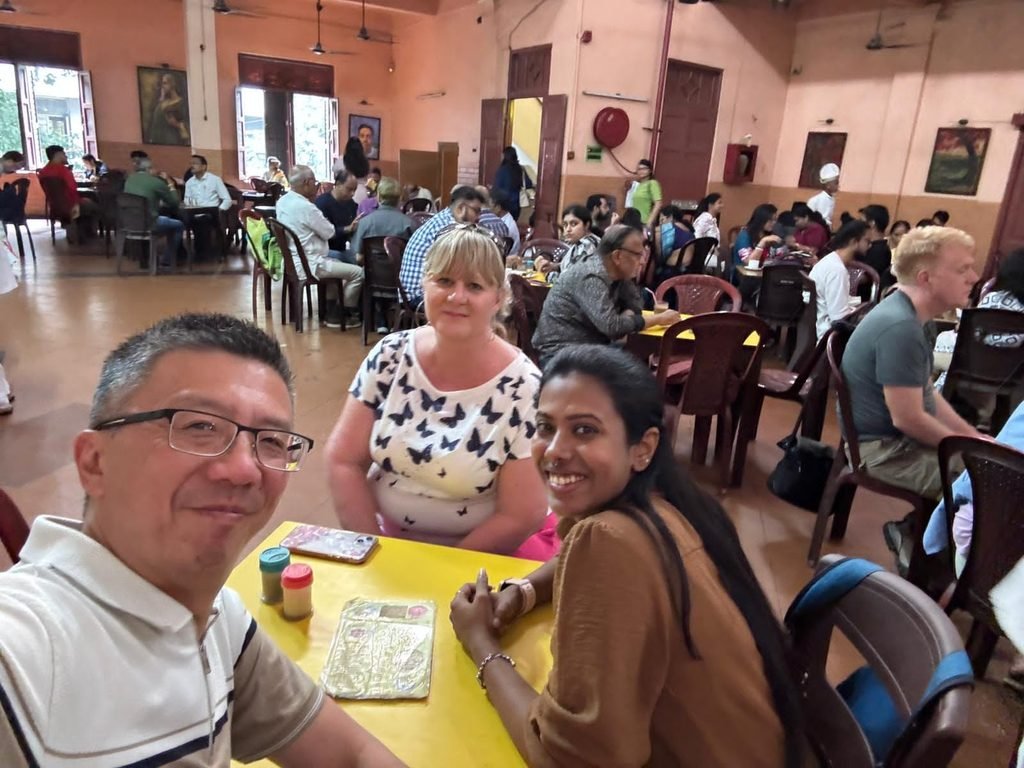
If there’s one place I’d never let you leave Kolkata without visiting, it’s the Indian Coffee House on College Street.
Now, let me set your expectations right. If you’re looking for fancy interiors, air conditioning, or Instagram-worthy latte art… this isn’t the place. In fact, you might think taking the stair, walk in, “This is it?”
Trust me. Go up. And BOOM. Welcome to a two storied big hallway.
what makes the Coffee House special isn’t the food. It isn’t even the coffee. It’s the stories that have unfolded here for decades.
This café has been around since the 1940s and has hosted some of Bengal’s greatest minds. Writers, poets, artists, professors, students, filmmakers, political leaders, you name it, they’ve probably argued over a cup of coffee at one of these tables. Conversations here don’t just last for fifteen minutes. They last for hours. and that’s exactly what I love about it. In a world where everyone’s rushing somewhere, the Coffee House almost refuses to hurry. The waiters still wear their traditional uniforms, the ceiling fans have been spinning for what feels like forever, and somehow everything has remained beautifully unchanged.
Food Suggestion
I’d recommend ordering a Chicken Kabiraji, one of Kolkata’s most iconic snacks, along with a cup of their special Hot/Cold. It taste like melted ice cream with rich condense milk. So don’t rush your meal. Look around. Listen to the chatter. Watch the waiters effortlessly weave through the crowded tables. For an hour or so, become a tiny part of the Coffee House story.
Visitor Information
- Location: College Street, Kolkata
- Nearest Metro: Mahatma Gandhi Road Metro Station (Blue Line) or Central Metro Station (Blue Line)
- Recommended Visit Time: Around 12:30 PM for lunch
- Time Required: 40-60 minutes
- Average Cost: ₹300–500 for two people
1:30 PM – Jorasanko Thakur Bari
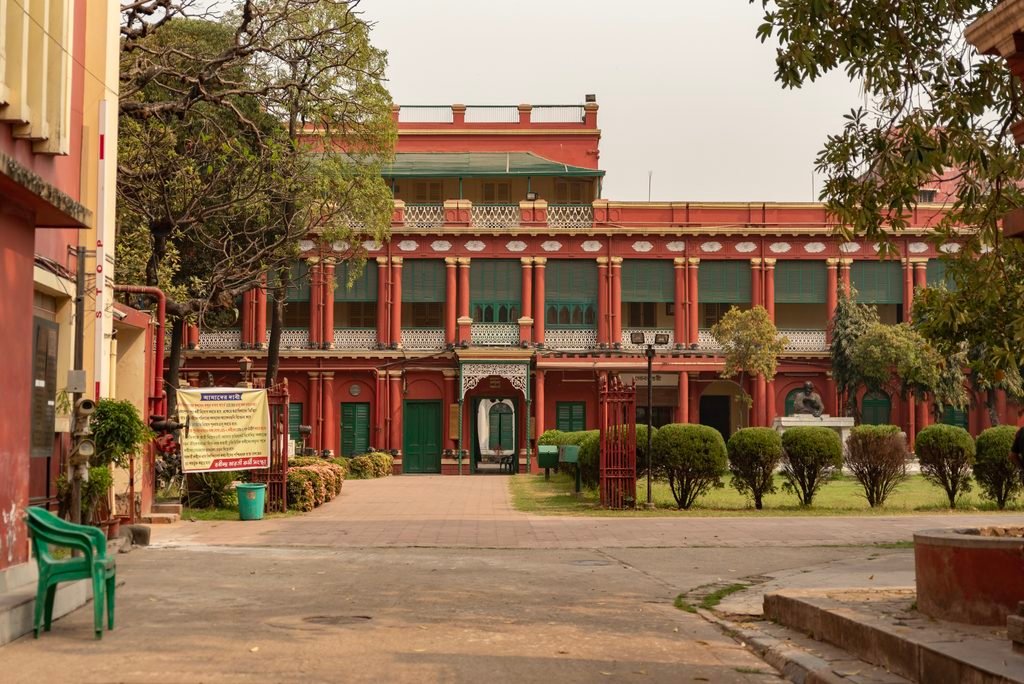
After lunch, it’s time to visit the home of the man who gave India its first Nobel Prize.
Just a short walk or a uber bike ride from the Indian Coffee House is Jorasanko Thakur Bari, the ancestral home of Rabindranath Tagore.
Now, if you’re wondering, “Who was Rabindranath Tagore?” that’s a fair question. He was not only a poet but a novelist, philosopher, playwright, painter, composer, educator… honestly, one of those people who somehow seemed good at everything. He became the first Asian to win the Nobel Prize in Literature in 1913, and to this day, he’s one of the most influential figures in Indian culture. Fun fact, he also wrote the national anthems of both India and Bangladesh.
Walking through Tagore’s ancestral home feels deeply personal. Following this Kolkata guide, you’ll explore the rooms where he lived and created, surrounded by his personal belongings and manuscripts. Even if you’ve never read his work, experiencing this space is essential to understanding the soul of Kolkata.
Take your time here. Wander through the courtyards, read a few of the exhibits, and imagine what this house must have been like over a hundred years ago, filled with music, poetry, debates, and creativity.
Visitor Information
- Location: Jorasanko, North Kolkata
- Recommended Visit Time: Around 1:30 PM
- Time Required: 90-120 minutes
- Entry Fee: ₹50 for Indians, ₹100 for Foreign National
- Photography: Not allowed inside, for the courtyard you need to make separate bill which is around ₹50 to take pictures.
3:45 PM – Kumartuli: Your Kolkata Guide to the city’s Artistic Heart
Now we’re heading to one of my favourite places in Kolkata.
From Jorasanko, book an Uber, Uber Moto, or hop into a yellow taxi—it’s only about a 10–15 minute ride away.
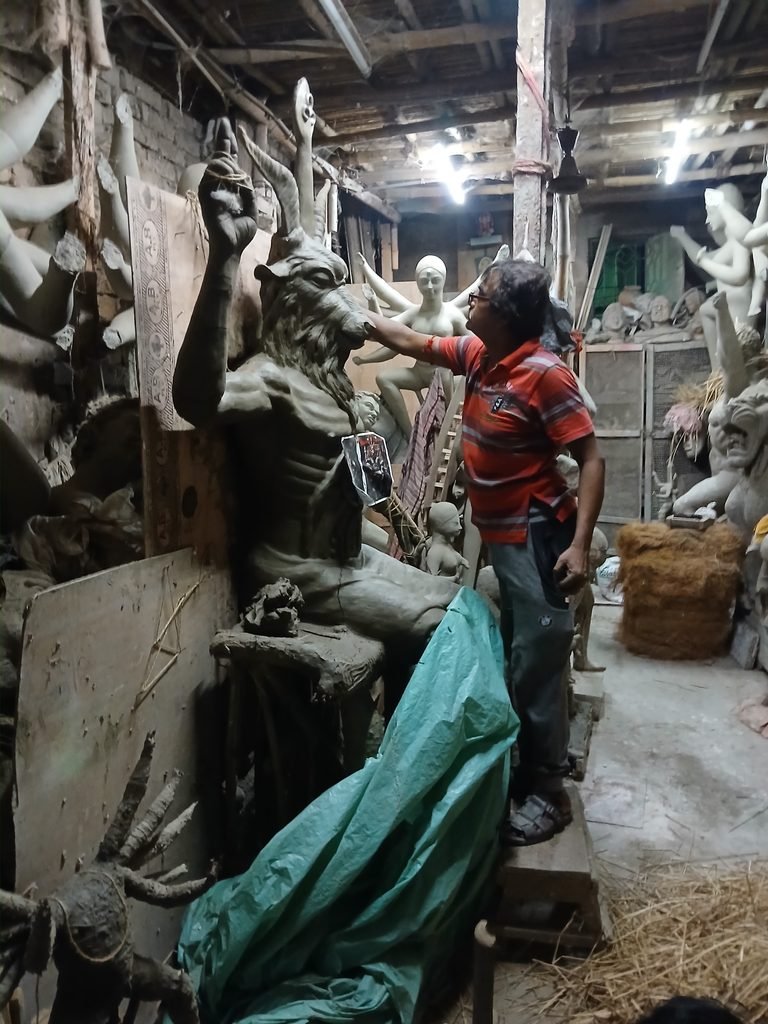
Kumartuli isn’t just another neighbourhood. It’s where some of Bengal’s most skilled artisans have been bringing gods and goddesses to life for generations. The process begins long before the festive season arrives. In fact, these workshops remain busy throughout the year, creating idols not just for Durga Puja but for festivals and temples across India and around the world.
The Idol-Making Process
What fascinated me the first time I learnt about it was how every idol starts from almost nothing. First comes a framework made of bamboo and hey. Layer by layer, clay is carefully applied by hand until the figure slowly begins to take shape.
Once it dries, the idol is smoothed, painted, dressed, and finally adorned with jewellery and ornaments. Every stage is done by hand, often by different members of the same family who have inherited this craft over generations. And here’s a beautiful tradition I absolutely love.
Before the sculpting begins, artisans collect a portion of the clay from the banks of the River Ganga, mixing it with other clay to create the idols. It’s a ritual that’s been followed for centuries and beautifully reflects the spiritual connection between the river, the city, and the festival.
As you wander through Kumartuli, don’t just look at the finished idols. As you weave through the narrow lanes highlighted in this Kolkata Guide, watching the artisans at work is truly unforgettable. Peek inside the workshops. You’ll see half-finished faces waiting to be painted, hands without bodies, bodies without eyes, and artists quietly focused on the tiniest details. Watching a deity slowly emerge from a bundle of straw and a lump of clay is nothing short of magical.
That’s what I love about Kumartuli. You’re not visiting a museum where everything is behind glass. You’re walking through a neighbourhood where art is still being created, one careful touch at a time.
Kumartuli Ghat
Before you leave, take a short walk to Kumartuli Ghat. It’s barely a couple of minutes away, and after spending an hour wandering through narrow lanes and artists’ workshops, the open view of the Hooghly River feels incredibly refreshing. If you’re visiting between October and February, chances are you’ll reach the ghat just as the afternoon begins to soften into golden hour.
The warm light bouncing off the river, boats drifting by, and the silhouettes of old buildings in the distance make so so precious. Sit down for a while. Watch the ferries come and go, catch your breath, and simply enjoy the view. You’ve been walking around since morning, you’ve earned this little pause before we head to our final stop.
Visitor Information
- Location: Kumartuli, North Kolkata
- Nearest Metro: Sovabazar Sutanuti Metro Station (Blue Line)
- Recommended Visit Time: Around 3:45 PM
- Time Required: 60-80 minutes
- Entry Fee: Free
- Photography: Completely allowed, even this is the photographer’s paradise. I would recommend to take permission before close portrait of someone working there.
Little tip before the last destination: book yourself an Uber to Mother House. I’d recommend skipping the bike this time and opting for a cab instead. By now, you’ve been on your feet for most of the day, and the air conditioning will probably feel like a blessing especially if you’re visiting during Kolkata’s warmer months. The drive usually takes around 25–35 minutes, giving you just enough time to relax before ending the day at one of the most peaceful places in the city.
5:30 PM – Mother House
Our final stop isn’t the grandest building you’ll see today, nor is it the most photographed. But in many ways, I think it’s the one that stays with you the longest.
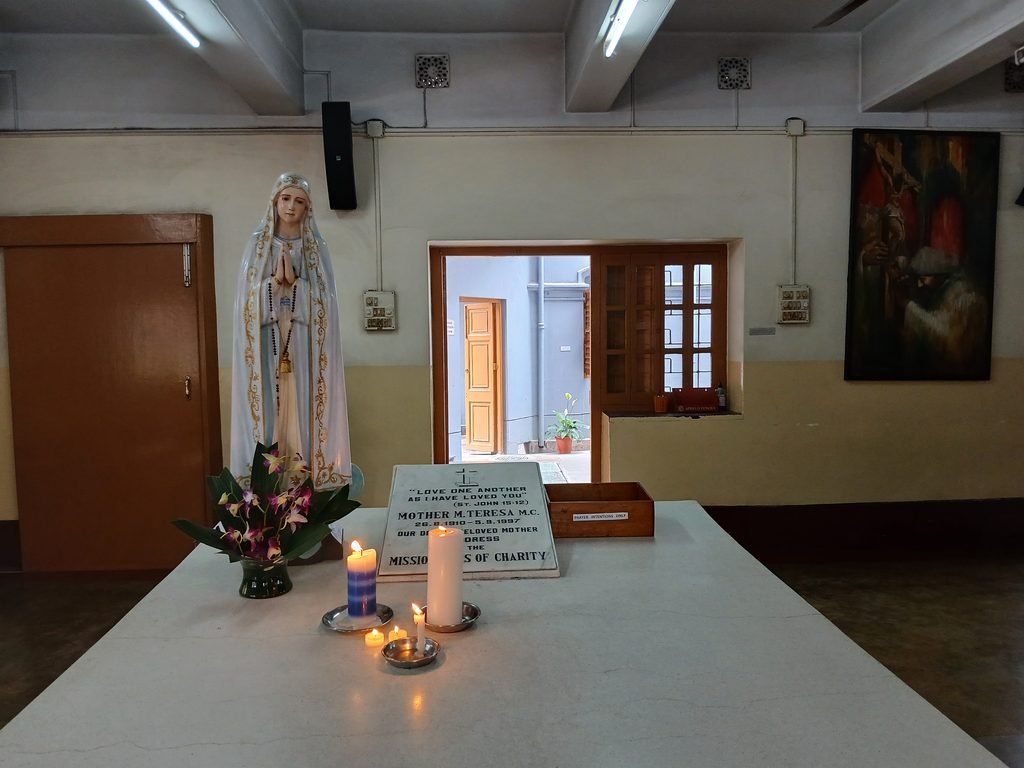
Welcome to Mother House, the headquarters of the Missionaries of Charity, founded by Mother Teresa in 1950. Concluding your day with this Kolkata Guide, stopping at Mother House offers a quiet and grounding space.”If you’ve spent the day exploring Kolkata’s history, architecture, and culture, this is where you’ll experience its heart.
This was Mother Teresa’s home for nearly fifty years. It’s where she lived, worked, prayed, and devoted her life to caring for people who had been forgotten by society. Her room has been preserved exactly as she left it simple, modest, and surprisingly small.
You can also visit her tomb, where people from all over the world come to pay their respects, and a little museum next to it. Whether you’re religious or not doesn’t really matter here. Mother Teresa’s work went far beyond religion. It was about kindness, compassion, and treating every human being with dignity. And somehow, you can still feel that spirit within these walls. I’d suggest slowing down here. Sit quietly for a few minutes, read about her life’s work, and let yourself reflect on everything you’ve experienced throughout the day.
After all the colours of Kumartuli, the conversations at Coffee House, and the grandeur of colonial Kolkata, I can’t think of a more fitting place to end your journey.
Visitor Information
- Location: Mother House, 54A A.J.C. Bose Road, Kolkata
- Recommended Visit Time: Around 5:40 PM
- Time Required: 20-30 minutes
- Entry Fee: Free
- Photography: Photography is generally not permitted inside the building.
Final Thoughts
So… did you see all of Kolkata in one day? Not even close. And that’s exactly the point.
Kolkata isn’t a city that reveals itself all at once. It’s a city that slowly grows on you through its people, stories, food, streets, art, and countless little moments you never planned for and if you’ve followed along with this Kolkata Guide, you’ve experienced something that many travellers miss.
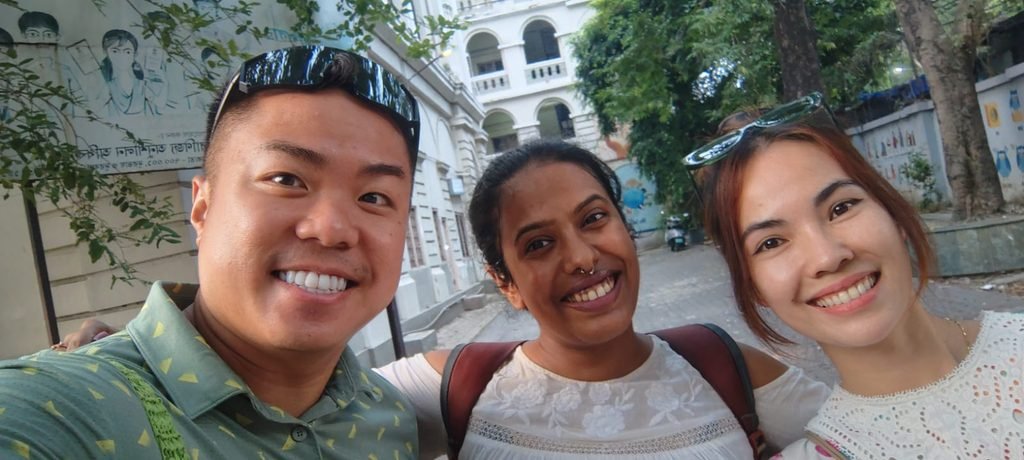
If you want to go beyond the usual sights and get an exceptional understanding of the city, check out our “Kolkata Full-Day Tour: A Sea of Faces and A Thousand Places“
In one immersive day, you’ll experience the stories, characters, culture and contradictions that make Kolkata what it is. You might just end up knowing and feeling more about Kolkata than 95% of its residents.
And if one day leaves you wanting more, that’s Kolkata doing what it does best.
There will always be another story waiting around the corner.